Document
We record published sources — codices, ethnographic records, archaeological finds and documented oral traditions.
OUR MYTH METHODOLOGY
Sacred Mask myths are structured educational assessments. We separate archaeological data from oral tradition and explain the evidence behind every claim.
We record published sources — codices, ethnographic records, archaeological finds and documented oral traditions.
Hands-on research is labeled separately. Otherwise our analysis relies on official materials and clearly identified public documentation.
Six criteria shape the final assessment. The number is a concise educational summary — not a scientific measurement or a promise that everyone will agree.
SIX QUESTIONS
Each category is considered on a ten-point educational scale, balanced against the type of experience the myth offers.
Does the myth align with archaeological finds? How reliable are the sources?
Does the myth preserve the internal logic of the culture? Does it contradict other traditions?
What layers of meaning does the myth contain? Does it work on multiple levels?
Does the myth avoid exoticization? Is the source culture represented respectfully?
Why does this myth matter today? What does it say to the contemporary reader?
Is this a unique telling? Are details preserved with care?
COSMOGONY & LEGENDS
Every myth is not just a story. It is a key to understanding how ancient cultures saw the world, death, time and the divine.
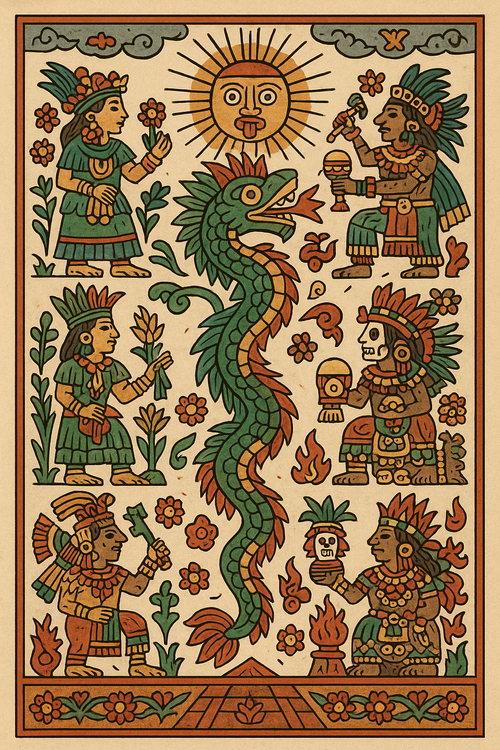
The Aztecs believed the world passed through five cycles of creation — five Suns. Each Sun ended in catastrophe: monsters, wind, fire, flood. The present, Fifth Sun, was born from the self-sacrifice of gods at Teotihuacan. This myth explained the necessity of human sacrifice — to keep the Sun moving.
Key idea: existence is not a gift but a debt. The gods paid with blood, and humans must continue that payment.
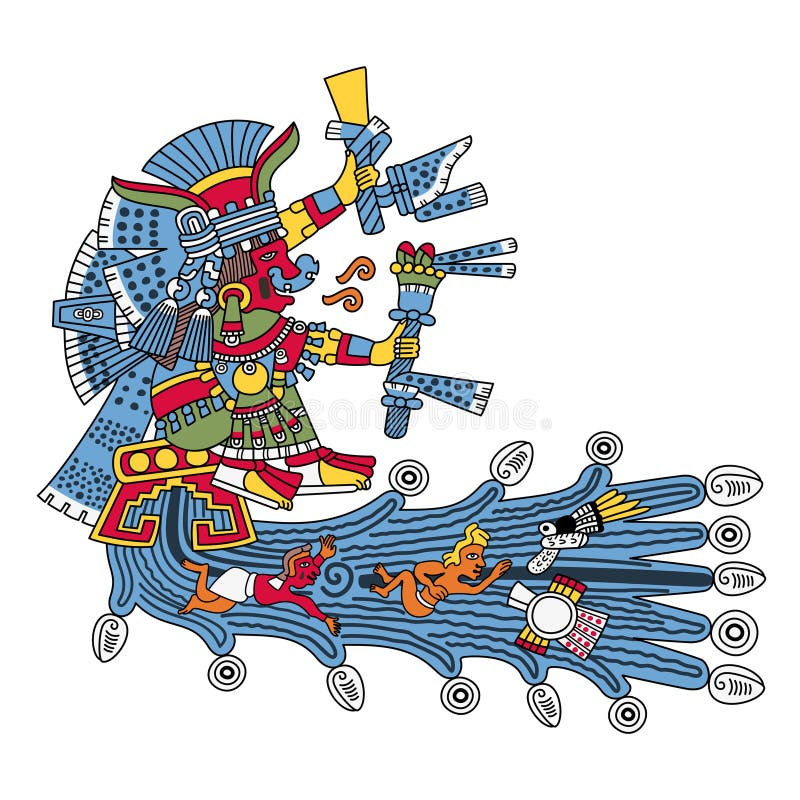
God of wind, knowledge, dawn and Venus as the morning star. Legend tells how Quetzalcoatl created humans from the bones of previous races, mixed with his own blood. He also brought maize to humanity — the foundation of life. His exile from Tula and promise of return became a central myth later exploited by conquistadors.
Key idea: knowledge demands sacrifice. The one who teaches must pay with blood.
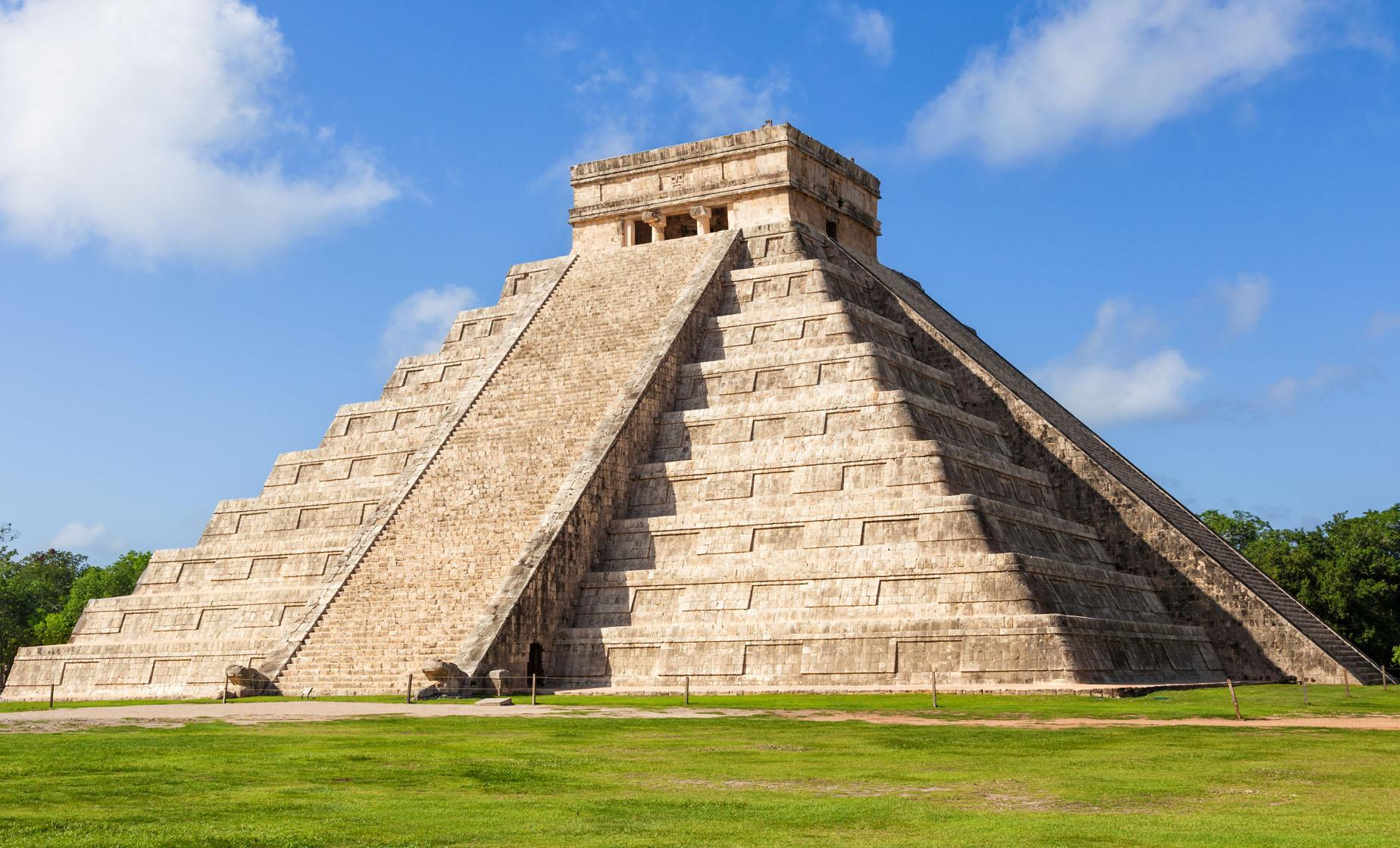
In the myth of the Popol Vuh, the hero twins Hunahpu and Xbalanque descend into Xibalba to defeat the Lords of Death. The underworld is described as a place of trials: the House of Knives, the House of Cold, the House of Jaguars. Victory over death gives birth to the Sun and Moon.
Key idea: death is not an end but a trial. Overcoming it opens a new cycle of life.
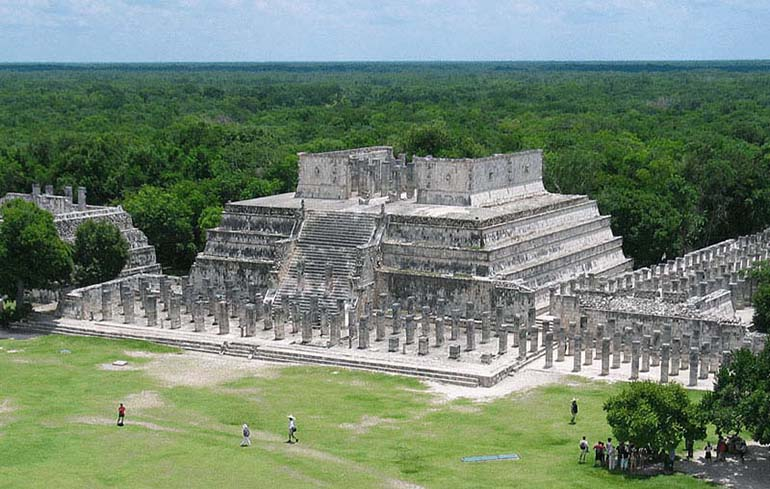
The Maya believed gods created humans from maize. First attempts — from clay, then from wood — failed. Only maize, the sacred grain, gave humans mind, flesh and soul. Therefore maize was not just food but the essence of humanity.
Key idea: what we eat defines who we are. Nature and culture are inseparable.
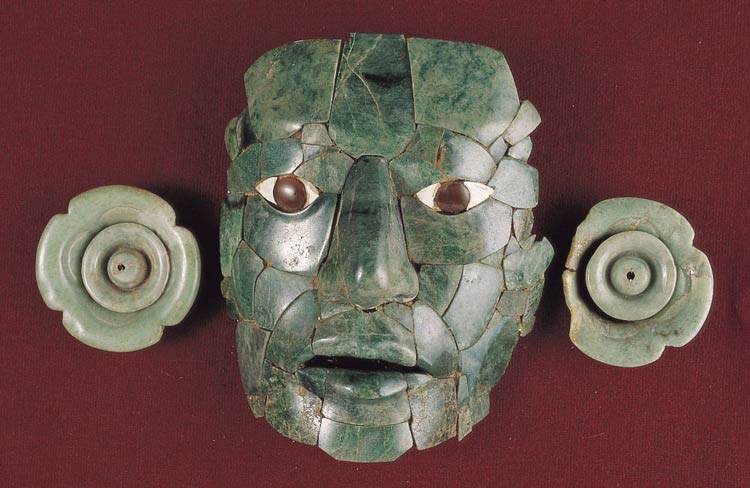
The Olmecs — "mother culture" of Mesoamerica — believed their rulers descended from a union of human and jaguar. This myth laid the foundation for the concept of "nagual" — an animal spirit that accompanies a person throughout life. The Jaguar-Man combined the predator's strength with human intelligence.
Key idea: human and animal are not opposites but continuations of each other. The strength of nature lives within each of us.
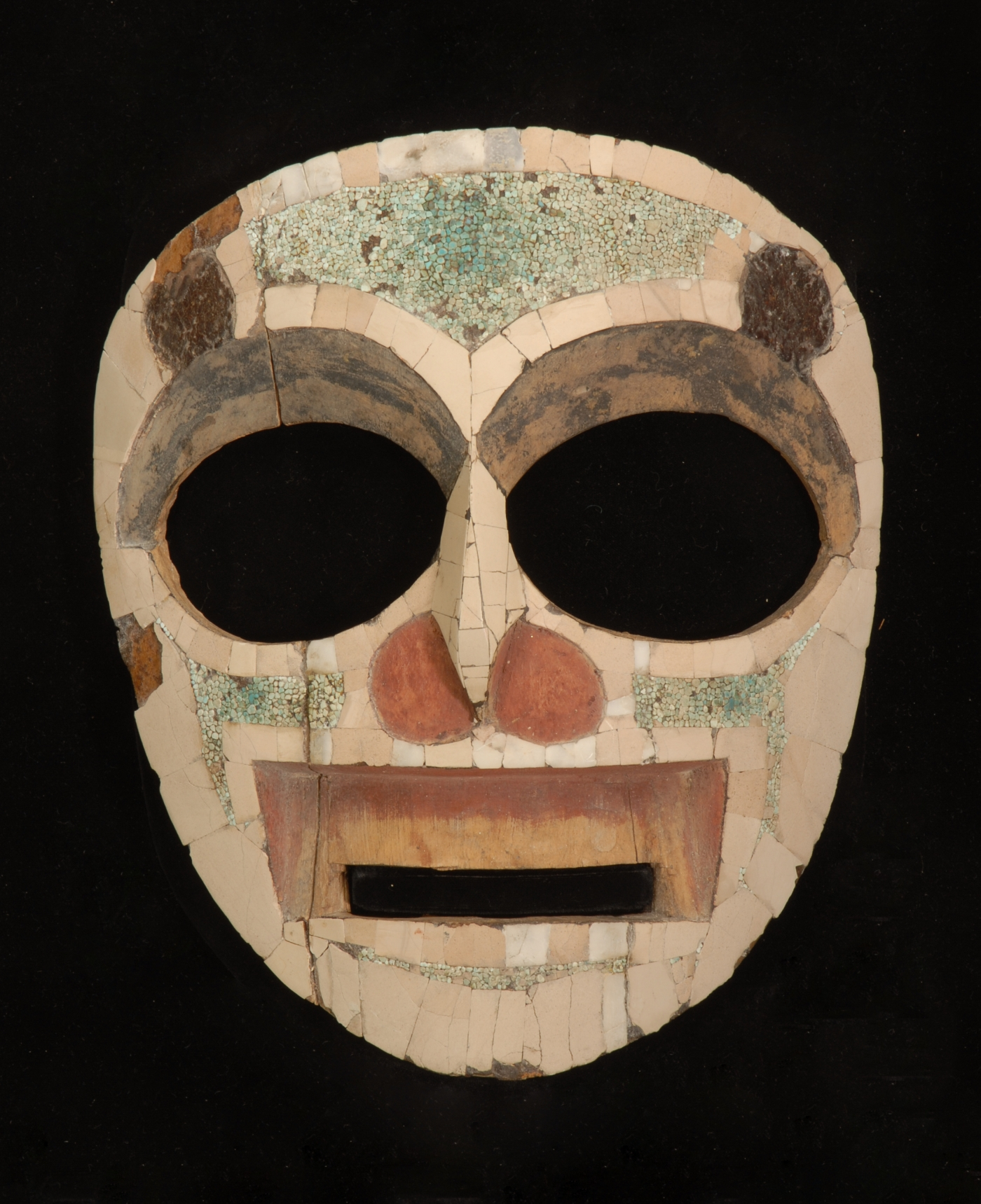
After death, an Aztec soul journeyed through nine levels of Mictlan — the underworld of Mictlantecuhtli. The journey lasted four years. At each level the soul faced trials: wind, mountains, knives, cold, jaguars. Only after passing all levels could the soul find peace.
Key idea: death is a journey, not a destination. The end is the beginning of a new state.
Sacred Mask does not accept payment for myth rankings. If a research grant, archive access or other relationship affects coverage, it is disclosed on that page. We correct factual errors when identified and distinguish opinions from verifiable details.
This educational project does not publish commercial reviews. Demonstration names and scores show the intended educational structure.
Ask about our methodology →